
WELCOME TO
HURST PEDIATRIC DENTISTRY!
Here at the pediatric dental office of Dr. Joby Hurst, we take pride in offering our young patients the highest quality of dental care in a kid-friendly environment. We are conveniently located in Birmingham, Alabama and are experienced in providing routine dental care for infants, children, teens and patients with special needs.
Dr. Hurst and his team of friendly professionals work together to provide a positive dental experience that will make your child smile! We promise to work with you and your child personally and create a customized treatment plan to meet your individual needs and desires.
Office tour
Early Dental Care
We believe early dental care can promote a lifetime of healthy smiles for your child. We offer a full range of services from routine dental exams and cleanings to fillings, sealants and fluoride treatments that will help ensure that your child grows up with a healthy smile.
Sedation Dentistry
We recognize that for some of our patients, a visit to the dentist makes them a bit nervous.
We offer nitrous oxide sedation for our more apprehensive patients, so they can relax while receiving the dental care that they need.
For those requiring more intensive treatment, Dr. Hurst offers in office anesthesia using Dr. Jeff Plagenhoef.
Dr. Jeff is a board-certified pediatric anesthesiologist with Pediatric Dental Anesthesia Associates.
We appreciate your interest in our practice and encourage you to continue exploring our website to learn more about us. Feel free to contact us to schedule an appointment with Dr. Joby Hurst today!
Blogs and Resources

Do Baby Teeth Really Need Fillings?
It is completely understandable to wonder why a baby tooth needs a filling. After all, that tooth is going to fall out someday.
Many parents ask this question, especially when their child is young and the cavity diagnosis feels unexpected. You may be thinking, “Can we just wait?” or “Does this really need to be treated now?”
Those are fair questions. If you are still wondering why the cavity happened even though you brush every day, start with our guide: “Why Does My Child Have Cavities Even Though We Brush?”
Baby teeth are temporary, but they are not throwaway teeth. They have important jobs while they are in place, and a cavity can sometimes affect your child’s comfort, chewing, and future dental health if it keeps growing.
That does not mean every cavity is handled the same way.
The right recommendation depends on your child’s age, the tooth involved, the size and location of the cavity, whether your child has discomfort, and how long that tooth is expected to stay in place.
At Hurst Pediatric Dentistry, we believe parents deserve clear explanations without pressure or guilt. If your child has a cavity in a baby tooth, our goal is to help you understand what is happening, why treatment may or may not be recommended, and what choice best supports your child’s comfort and health.
Why Baby Teeth Matter

Baby teeth may be temporary, but they have important work to do.
They help your child chew comfortably, speak clearly, and smile with confidence. They also help hold space for the adult teeth developing underneath.
That is why a cavity in a baby tooth should not be brushed off just because the tooth will fall out one day.
When a baby tooth has a cavity, the damaged area can grow over time. If it gets deeper, your child may begin to feel sensitivity or discomfort when eating, drinking, brushing, or chewing on that side.
Treating the tooth early, when treatment is recommended, can help protect your child’s comfort and keep that tooth working the way it should until it is ready to fall out naturally.
For a young child, that can mean fewer food struggles, easier brushing, and less chance that the cavity becomes a bigger concern later.
A filling is not about blame. It is about helping a tooth that needs support.
Once parents understand that, the recommendation often feels less confusing. The question shifts from “Why treat a tooth that will fall out?” to “How do we help this tooth do its job while my child still needs it?”
When a Filing May Be Recommended
A filling may be recommended when a cavity is likely to keep growing or begin affecting your child’s comfort.
Cavities usually do not stay the same forever. A small spot can become deeper over time, especially if it is in an area where food and plaque collect easily. Once the cavity reaches more sensitive parts of the tooth, your child may start avoiding certain foods, chewing on one side, or complaining when something feels cold, sweet, or uncomfortable.
A filling is designed to remove the damaged part of the tooth and restore the area so the tooth can keep doing its job.
For a baby tooth, that job still matters.
The decision depends on several factors, including:
Your child’s age
Which tooth has the cavity
The size and depth of the cavity
Whether your child has discomfort
How long the tooth is expected to stay in place
Your child’s overall cavity risk
Sometimes a filling helps prevent a small problem from becoming a bigger one. Other times, if a tooth is close to falling out or the cavity is very small, your pediatric dentist may discuss a different plan.
That is why the “why” behind the recommendation matters.
Parents should feel comfortable asking:
“What happens if we treat it now?”
“What happens if we wait?”
“How long does this baby tooth need to stay in place?”
“What option best protects my child’s comfort?”
At Hurst Pediatric Dentistry, our goal is to explain recommendations in clear, parent-friendly language so you can make an informed decision without feeling rushed, blamed, or overwhelmed.
What Happens During a Pediatric Dental Filling?
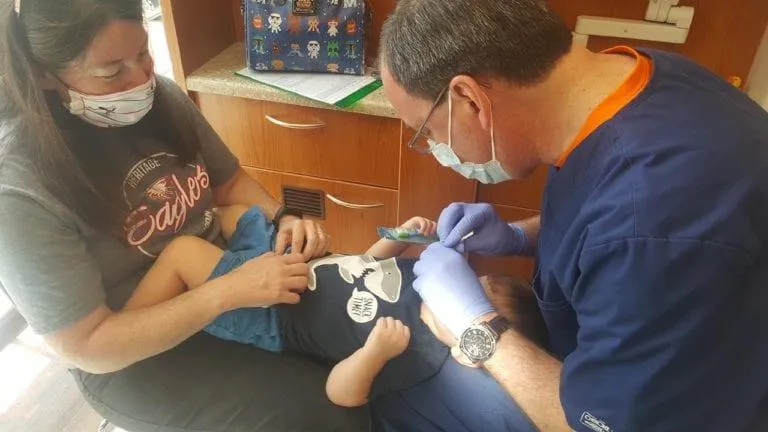
If your child needs a filling, it is natural to wonder what the appointment will be like.
A pediatric dental filling is a way to repair a tooth after a cavity has damaged part of it. The goal is to gently remove the unhealthy part of the tooth, clean the area, and place a filling material that helps the tooth function normally again.
The exact steps can vary depending on the tooth, the size of the cavity, your child’s age, and how comfortable they feel in the dental chair.
A good pediatric dental team will explain the plan before treatment begins so you know what to expect.
For young children, comfort matters just as much as the tooth repair.
Pediatric dental teams often use child-friendly words, simple explanations, encouragement, and breaks when needed. Some children may need extra support if they are anxious, sensitive to sounds, or unsure about new experiences.
If your child is nervous or has trouble sitting still, your pediatric dentist can talk with you about what may help. Options depend on your child’s age, health history, comfort level, and treatment needs.
Most of all, a filling should not feel like a punishment for having a cavity.
It is care. It is support. It is a way to help your child’s tooth stay comfortable and useful while it is still needed.
If your child has a cavity in a baby tooth, Hurst Pediatric Dentistry can help you understand the recommendation, ask the right questions, and choose the next step with more confidence.
Schedule a pediatric dental visit today, and let’s talk through what your child’s tooth needs with care, clarity, and no guilt.

19 INVERNESS CENTER PARKWAY, STE 250, BIRMINGHAM, AL 35242
TEL: 205.969.7454
E-MAIL: [email protected]
2018 © ALL RIGHTS RESERVED | PRIVACY POLICY | TERMS AND CONDITIONS
Site by Trustway Marketing Powered by Kyrios Systems