
WELCOME TO
HURST PEDIATRIC DENTISTRY!
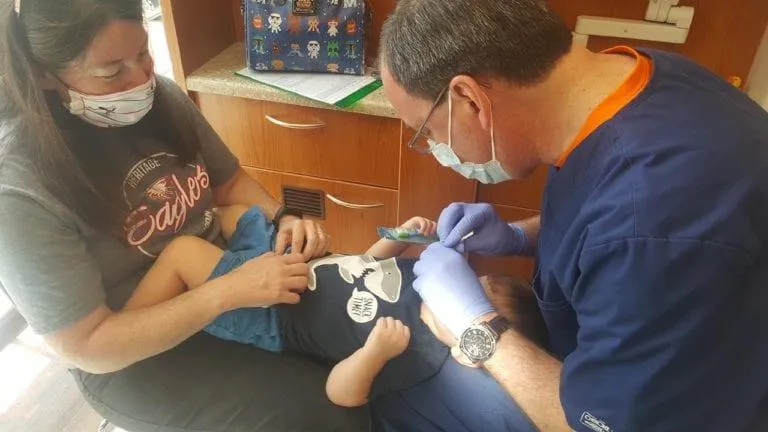
Here at the pediatric dental office of Dr. Joby Hurst, we take pride in offering our young patients the highest quality of dental care in a kid-friendly environment. We are conveniently located in Birmingham, Alabama and are experienced in providing routine dental care for infants, children, teens and patients with special needs.
Dr. Hurst and his team of friendly professionals work together to provide a positive dental experience that will make your child smile! We promise to work with you and your child personally and create a customized treatment plan to meet your individual needs and desires.
Office tour
Early Dental Care
We believe early dental care can promote a lifetime of healthy smiles for your child. We offer a full range of services from routine dental exams and cleanings to fillings, sealants and fluoride treatments that will help ensure that your child grows up with a healthy smile.
Sedation Dentistry
We recognize that for some of our patients, a visit to the dentist makes them a bit nervous.
We offer nitrous oxide sedation for our more apprehensive patients, so they can relax while receiving the dental care that they need.
For those requiring more intensive treatment, Dr. Hurst offers in office anesthesia using Dr. Jeff Plagenhoef.
Dr. Jeff is a board-certified pediatric anesthesiologist with Pediatric Dental Anesthesia Associates.
We appreciate your interest in our practice and encourage you to continue exploring our website to learn more about us. Feel free to contact us to schedule an appointment with Dr. Joby Hurst today!
Blogs and Resources

Why Your Child’s Teeth May Look Healthy Even When Tooth Decay Is Developing
Your child is eating normally. They haven’t complained about their teeth. You help with brushing, glance at their smile, and everything looks healthy.
That is reassuring, but it does not always tell the whole story.
Tooth decay can begin before there is an obvious hole, dark spot, or toothache. In its earliest stages, decay often causes no symptoms at all. A child may continue eating, playing, and smiling normally while changes are beginning beneath or between surfaces that are difficult for a parent to see.
That does not mean you should be inspecting every tiny mark on your child’s teeth or worrying that a hidden problem is always developing. Healthy-looking teeth are a positive sign. They simply are not a substitute for a complete dental evaluation.
Understanding what you can notice at home, what may be harder to see, and how regular pediatric dental visits help fill those gaps can make caring for your child’s growing smile feel much clearer.
In this guide, we’ll explain why tooth decay can sometimes develop quietly, which early signs are worth noticing, and how you can help protect your child’s teeth before small changes have a chance to become bigger concerns.
Can a Child Have Tooth Decay Even If Their Teeth Look Healthy?

Yes. A child can have early tooth decay even when their teeth appear healthy and they are not experiencing any discomfort.
Tooth decay develops gradually. Bacteria in the mouth use sugars and starches from food and drinks to produce acids that remove minerals from tooth enamel. During the earliest stage, this mineral loss may cause a subtle white spot, but it may also be difficult for a parent to notice. Early tooth decay usually does not cause symptoms.
If the process continues, the enamel can weaken until a cavity forms. Even then, children do not always realize something is wrong. Some cavities are discovered during a routine dental examination before a child reports pain or sensitivity.
This is why the absence of a toothache does not necessarily mean there is no decay developing. It also does not mean parents are expected to catch every early change themselves.
Think of what you see at home as one part of the picture. Brushing, flossing, and paying attention to changes are valuable habits. Regular dental examinations add another layer by allowing a pediatric dentist to look closely for early changes that may be subtle or difficult to see.
The encouraging part is that finding tooth decay early can make a meaningful difference. Before a cavity has formed, some early enamel changes may be stopped or reversed with preventive care and fluoride.
Why Tooth Decay Can Be Difficult for Parents to See
Some areas of a child’s mouth are simply hard to inspect at home. Even with good lighting and careful brushing, early changes can develop in places that are not easy to see clearly.
Decay Can Develop Between Teeth
When teeth touch closely together, the surfaces between them can trap plaque and food particles. These areas are difficult to see without dental instruments, and some changes may only become visible with dental X-rays when those X-rays are appropriate for the child.
This is one reason flossing matters once teeth begin touching. It helps clean areas that a toothbrush cannot reach as effectively.
Deep Grooves Can Hide Early Changes
The chewing surfaces of back teeth naturally have pits and grooves. These tiny spaces can hold plaque and food even when the rest of the tooth looks clean.
A dark groove does not automatically mean there is a cavity. Some marks are harmless, while others may need closer evaluation. A pediatric dentist can examine the tooth and determine whether the area is healthy, simply stained, or showing signs of decay.
Early Tooth Decay May Look Subtle
Tooth decay does not always begin with a dark spot or visible hole. One of the earliest signs can be a chalky or dull white area where minerals have begun leaving the enamel.
Because these changes can be small, they are easy to overlook during normal brushing. White, brown, or dark areas can also have causes other than decay, so noticing a change is more useful than trying to diagnose it yourself.
Some Problems Develop Before a Child Feels Anything
Parents often expect a child to say something if a tooth is developing a problem. That makes sense, but discomfort is not always an early warning sign.
A child may have early decay without pain or sensitivity, which means normal eating, sleeping, and playing do not always rule it out.
The goal is not to make you suspicious of every tooth that looks normal. It is to understand that some areas and early changes are easier for a dental professional to evaluate than they are to spot at home.
What Are the Early Signs of Tooth Decay in Children?
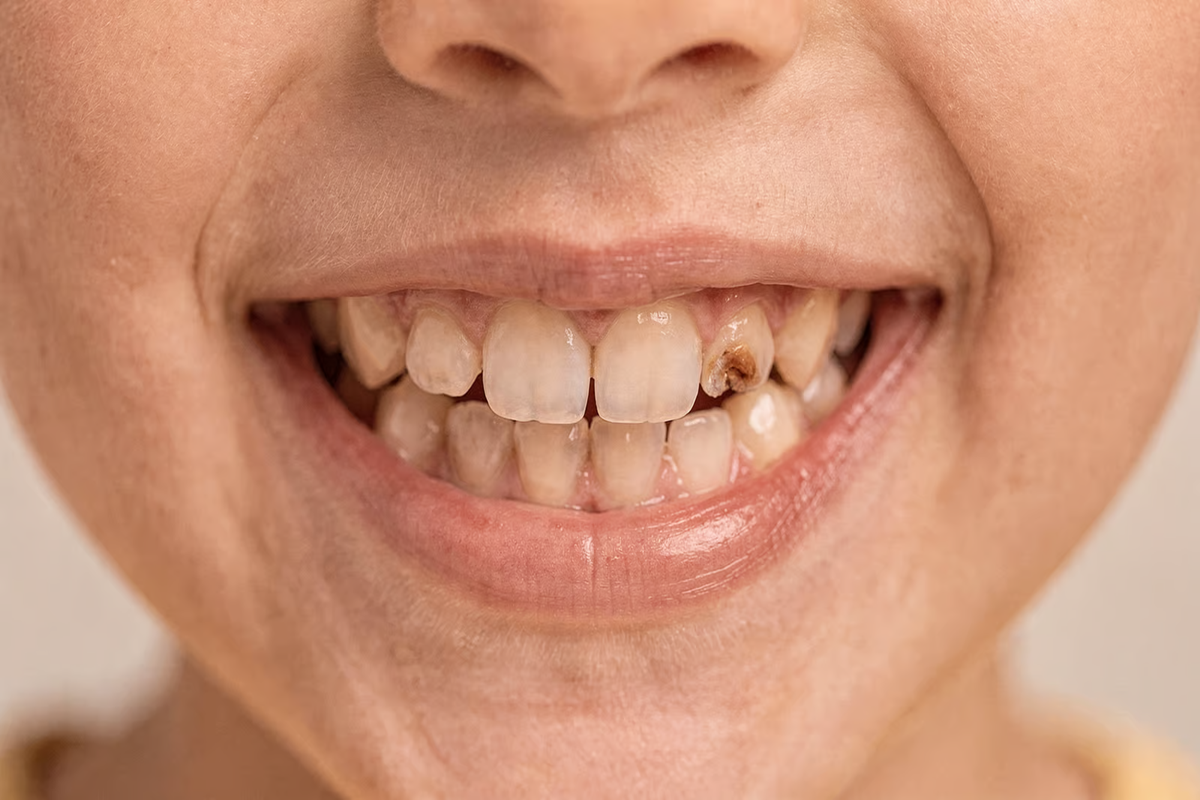
Early tooth decay does not always look dramatic. In fact, some children have no noticeable symptoms at first, which is one reason routine dental exams are so valuable.
When changes do become visible or noticeable, parents may see or hear about signs such as:
White or chalky-looking areas on a tooth
Light brown, dark brown, or black discoloration
Sensitivity to sweets, hot foods, or cold drinks
Tooth discomfort
A visible pit or hole in the tooth
Complaints about a specific tooth while eating or chewing
A white spot can be one of the earliest visible signs that enamel is losing minerals. At this stage, the tooth has not necessarily developed a cavity yet, and early decay may sometimes be stopped or reversed with appropriate preventive care.
As decay progresses, discoloration may become more noticeable, and a cavity can eventually form. Some children may develop sensitivity or pain, while others may still have very few symptoms until a dentist identifies the problem during an examination.
The important thing is to watch for changes without assuming every mark means decay. White spots, dark areas, and other changes in appearance can have different causes. If something looks different or your child starts mentioning discomfort, it is worth bringing it to your pediatric dentist’s attention.
You are not expected to diagnose the problem at home. Your role is simply to notice what is changing and ask questions when something does not look or feel normal.
Can a Child Have a Cavity Without Tooth Pain?
Yes. A child can have a cavity without feeling or reporting tooth pain.
Pain is not always the first sign of tooth decay. Early decay can develop quietly, and some children may not notice sensitivity or discomfort until the problem has progressed further into the tooth.
That means “my child would tell me if something hurt” is understandable, but it is not a reliable way to rule out a developing cavity.
Children may also describe discomfort differently than adults. Instead of saying, “My tooth hurts,” a child might chew on one side, avoid certain foods, become more sensitive to cold drinks, or simply say something feels “funny.” Other children may show no obvious changes at all.
This is why routine dental exams matter even when your child feels completely fine. A pediatric dentist can look closely for early signs of decay before pain becomes the signal that something needs attention.
The goal is not to wait for discomfort before taking action. Keep up with healthy habits at home, maintain regular dental visits, and mention any changes you notice along the way.
What Can a Pediatric Dentist See That a Parent Cannot?
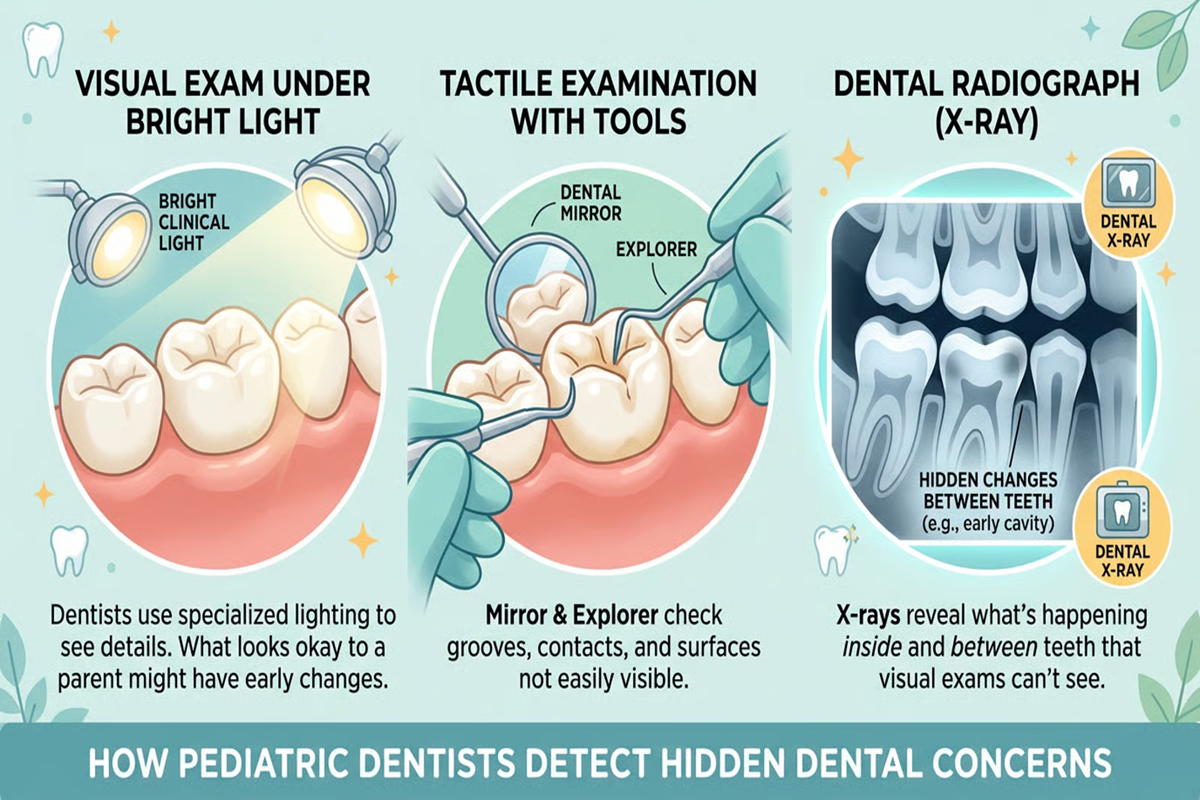
Parents can catch a lot at home. You see your child’s teeth every day, notice changes in their smile, and often hear about discomfort before anyone else does.
A pediatric dental exam adds a different kind of view. It allows the dentist to look closely at areas that are difficult to inspect at home and evaluate changes in the context of your child’s age, development, and cavity risk.
A Closer Look at Every Tooth
A pediatric dentist checks more than whether a tooth looks clean.
During an exam, they can evaluate:
The chewing surfaces and grooves of back teeth
Areas where teeth touch
Early changes in enamel
Gum health
How teeth are erupting
Bite and jaw development
Areas that may be harder to brush effectively
This helps build a more complete picture of your child’s oral health than appearance alone can provide.
Changes That Are Easier to Recognize With Dental Training
Not every white spot, dark mark, or groove means tooth decay.
Some changes are harmless. Others may need closer monitoring. Pediatric dentists are trained to look at the pattern, location, texture, and overall condition of the tooth before deciding what a change may mean.
That distinction matters because the goal is not to treat every unusual-looking spot. It is to identify which changes deserve attention and which do not.
X-Rays When They Are Appropriate
Some areas cannot be seen clearly during a visual exam, especially between teeth or beneath certain surfaces.
When appropriate for the child, dental X-rays can provide additional information about areas that are difficult to evaluate by sight alone. They may help identify developing concerns before those changes become obvious at home.
X-rays are not automatically needed at every visit. Their use should depend on factors such as your child’s age, dental history, risk of tooth decay, and what the dentist finds during the exam.
The important difference is this: a dental visit is not simply another person looking at your child’s teeth. It is a more complete evaluation designed to catch changes that may be easy to miss at home.
Why Regular Dental Checkups Matter Even When Nothing Seems Wrong
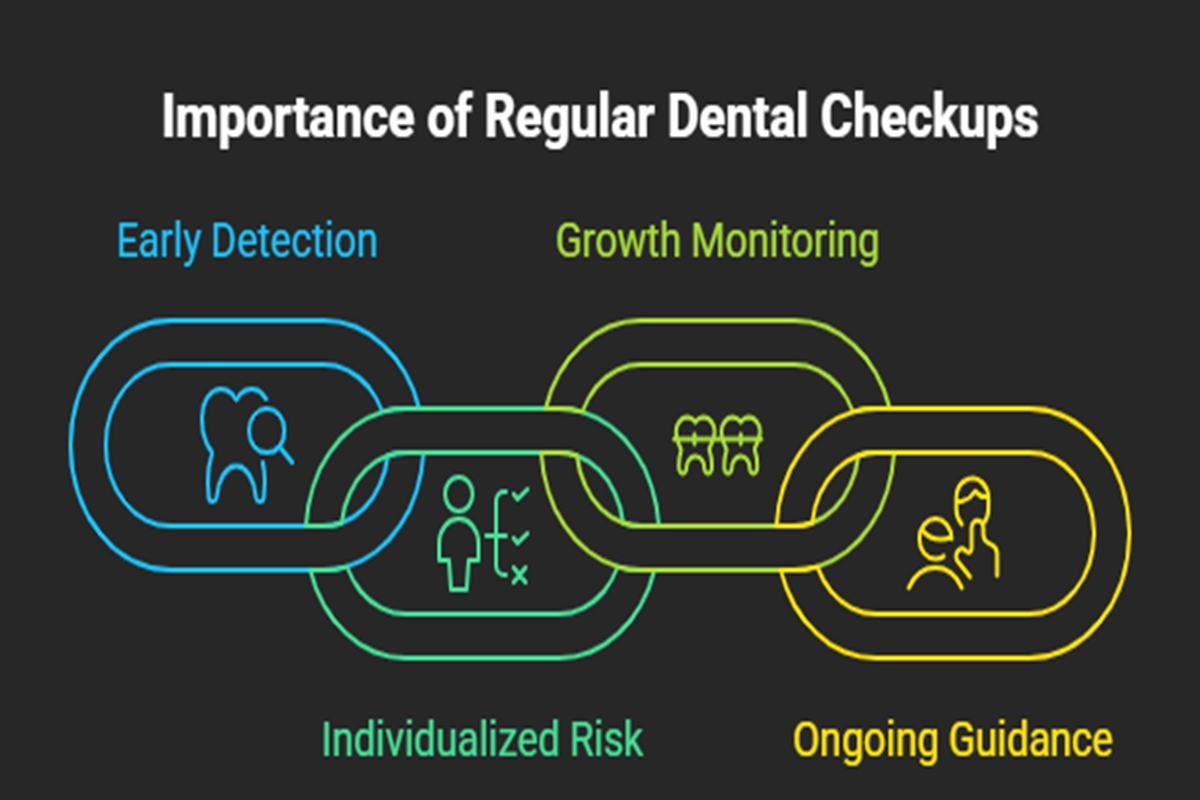
A dental checkup is not only for fixing a problem after it appears. It is also a chance to catch small changes early, monitor how your child’s mouth is developing, and adjust preventive care as their needs change.
That matters because children’s teeth can change quickly. New teeth erupt, spacing changes, brushing becomes easier or harder, and cavity risk can shift over time.
Early Changes Can Be Easier to Manage
When a concern is found early, there may be more options for monitoring or preventive care before the problem becomes more involved.
This is especially important with early tooth decay, which may begin before a child feels pain or before a parent sees an obvious cavity.
Your Child’s Cavity Risk Can Change
Two children can have very different cavity risks, even if they are the same age.
A pediatric dentist can consider factors such as:
Previous cavities
Brushing and flossing habits
Diet and snacking patterns
Tooth spacing
Enamel condition
Medical or developmental needs
This helps make preventive recommendations more specific to your child rather than relying on a one-size-fits-all plan.
Checkups Also Track Growth and Development
Pediatric dental visits are also an opportunity to monitor how baby teeth are changing, how permanent teeth are coming in, and how the bite is developing.
These changes are part of a growing smile, and regular visits make it easier to compare what is happening over time.
Prevention Works Best as an Ongoing Habit
Routine visits also give parents a chance to ask questions about brushing, flossing, fluoride, snacks, or anything else that feels unclear.
You do not have to figure everything out on your own. Regular checkups create a steady rhythm of professional guidance, home care, and early attention when something changes.
Even when everything looks healthy, that ongoing monitoring helps protect your child’s smile and gives you more confidence about what is happening beneath the surface.
Which Children May Have a Higher Risk of Developing Tooth Decay?

Every child is different. Some children may develop cavities more easily than others because of their dental history, daily habits, tooth structure, or health needs.
That does not mean a child with higher risk will definitely develop decay. It simply means their dental team may recommend closer monitoring or more personalized preventive care.
Factors that can increase cavity risk may include:
A history of previous cavities
Frequent snacking or sipping on sugary drinks
Difficulty brushing or flossing effectively
Teeth that are crowded or tightly spaced
Enamel that is more vulnerable to decay
Dry mouth
Certain medications or medical conditions
Developmental or sensory needs that make daily oral care more difficult
For some children, brushing and dental visits may take more patience, flexibility, or support. A child with sensory sensitivities, dental anxiety, or special healthcare needs may have a harder time tolerating brushing, flossing, or routine care.
In those situations, the goal is not perfection. It is to create a realistic plan that supports the child’s comfort while still protecting their oral health.
A pediatric dentist can help identify which risk factors apply to your child and recommend preventive steps that fit their needs. That may include changes to home care, closer monitoring, or additional preventive support.
Understanding your child’s individual risk helps turn dental care from a guessing game into a clearer, more manageable plan.
What Parents Can Do Between Dental Visits
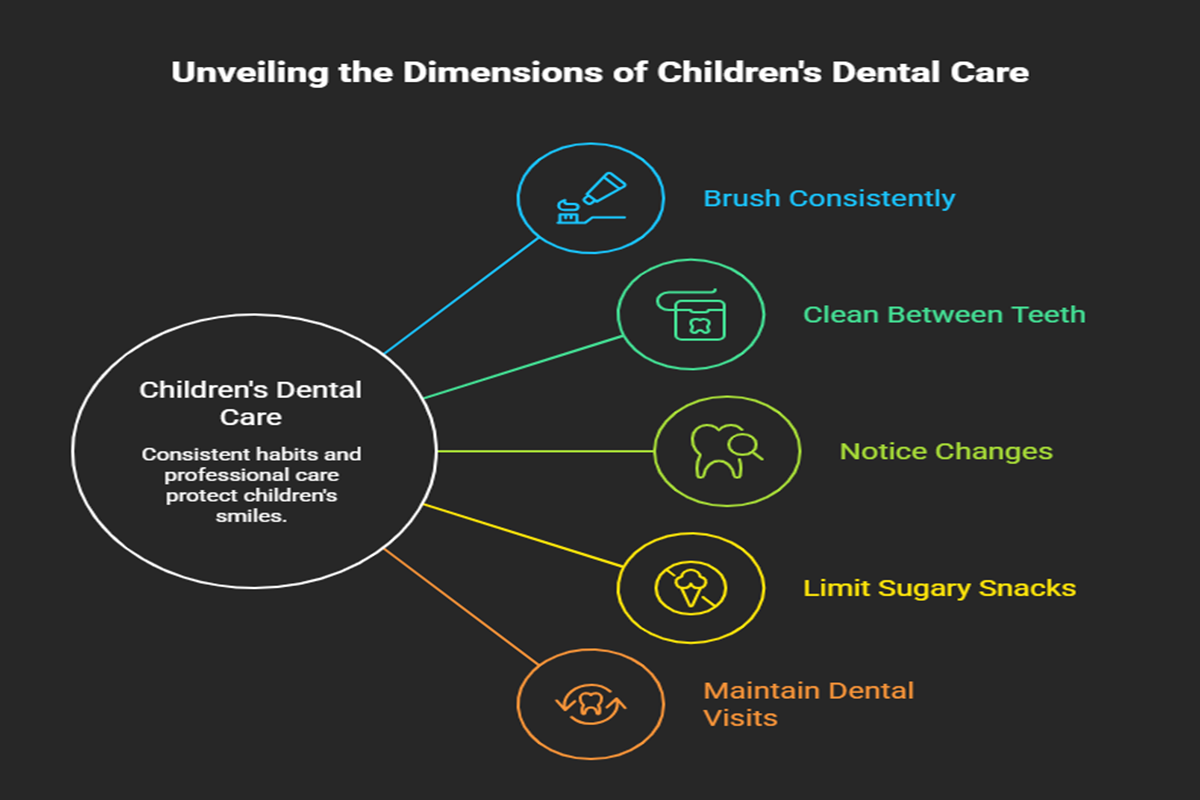
You do not need to become a dental detective at home. The most useful thing you can do is build consistent habits, notice meaningful changes, and know when to ask for help.
A few simple routines can make a big difference over time.
Brush Consistently With Fluoride Toothpaste
Brushing twice a day helps remove plaque before it has more time to affect tooth enamel.
For young children, brushing usually works best when a parent helps rather than leaving the job entirely to the child. Little hands are still developing the coordination needed to clean every surface well.
Clean Between Teeth When Teeth Touch
Once teeth begin touching each other, a toothbrush may not clean the contact areas effectively.
Cleaning between those teeth helps remove plaque from places that are otherwise easy to miss. This is especially useful because some decay begins in areas that are difficult to see at home.
Pay Attention to Changes Without Trying to Diagnose Them
If you notice a new white spot, dark area, sensitivity, or a change in how your child is chewing, make a note of it.
You do not need to decide whether it is a cavity.
Simply noticing that something has changed gives you useful information to share with your child’s dentist.
Be Mindful of Frequent Sugary Snacks and Drinks
Sugar is not the only factor involved in tooth decay, but frequent exposure can give cavity-causing bacteria more opportunities to produce acids.
Instead of focusing only on whether a food contains sugar, pay attention to how often your child is snacking or sipping throughout the day.
Keep Routine Dental Visits
Home care and professional care work best together.
Brushing, cleaning between teeth, and healthy eating habits protect your child every day. Routine dental visits add professional monitoring, preventive guidance, and the chance to catch changes that may not be obvious at home.
The goal is not perfect teeth or perfect routines. It is steady, realistic care that helps protect your child’s smile as they grow.
When Should You Call Your Child’s Dentist Before the Next Checkup?
Routine dental visits are important, but some changes are worth asking about sooner.
You do not need to know exactly what is causing the problem before you call. If something looks different, feels different, or starts affecting how your child eats or behaves, that is enough reason to check in.
Consider contacting your child’s dentist if you notice:
New tooth sensitivity
Discomfort while chewing
A visible hole or broken area in a tooth
Swelling around a tooth or the gums
Ongoing tooth discomfort
A new white, brown, or dark area that concerns you
A dental injury
A change in how your child eats, chews, or avoids certain foods
You may also want to reach out if your child cannot clearly explain what feels wrong but keeps pointing to the same area or says something feels unusual.
Parents often hesitate because they are not sure whether a change is “serious enough” to mention. You do not need that certainty.
Your job is to notice the change. Your child’s dental team can help determine what it means and whether it needs attention now or can wait until the next routine visit.
Healthy Teeth Are About More Than What You Can See

A bright smile, comfortable eating, and no complaints are all encouraging signs. But healthy teeth are about more than what is visible in the mirror.
Some changes can begin in places that are difficult to see, including between teeth, inside deep grooves, or beneath the surface of enamel. Other changes may be so subtle that they are easy to miss during normal brushing.
That is why caring for your child’s teeth works best as a combination of home habits and professional monitoring.
At home, you can help by brushing consistently, cleaning between teeth, paying attention to changes, and supporting balanced eating habits.
At dental visits, your child’s dentist can look more closely at areas that are harder to inspect, monitor how the mouth is developing, and identify changes that may need attention.
The goal is not to inspect your child’s mouth perfectly.
It is to build healthy habits, notice when something changes, and have a trusted dental team helping you monitor the parts of your child’s oral health that are harder to see.
That approach gives you something more useful than constant worry: a clear plan for protecting your child’s growing smile.
Give your child’s smile the benefit of a closer look. Schedule a visit with Hurst Pediatric Dentistry.
Frequently Asked Questions About Tooth Decay in Children
Parents often have questions about what they should be able to see, what might be happening beneath the surface, and when a dental visit is worth scheduling. Here are clear answers to some of the most common concerns.
Can a Child Have a Cavity Without Pain?
Yes. Tooth decay can develop without causing pain, especially in its earlier stages. A child may eat, sleep, and play normally even when a cavity is developing.
Pain is useful information when it occurs, but it should not be the only signal parents rely on to judge whether a tooth is healthy.
What Does Early Tooth Decay Look Like in Children?
Early tooth decay may appear as a chalky or dull white area on the enamel. As decay progresses, a tooth may develop brown or dark discoloration, sensitivity, or eventually a visible hole.
These changes can have other causes, so a spot on a tooth does not automatically mean your child has a cavity. A dental exam can help determine what the change represents.
Can Cavities Develop Between Baby Teeth?
Yes. Decay can develop on the surfaces where neighboring teeth touch, making it difficult to see at home.
This is one reason cleaning between touching teeth and keeping regular dental visits are important. A pediatric dentist can evaluate areas that are difficult to inspect with a toothbrush and bathroom mirror alone.
Does Every White or Dark Spot on a Child’s Tooth Mean a Cavity?
No. Teeth can develop changes in color or appearance for several reasons.
Instead of trying to identify the cause yourself, pay attention to whether the spot is new or changing and mention it to your child’s dentist. That allows the area to be evaluated without assuming something is wrong.
Why Does My Child Need a Dental Checkup If Their Teeth Look Fine?
Because a dental checkup evaluates more than appearance.
A pediatric dentist can examine areas that are difficult to see at home, look for early enamel changes, assess your child’s cavity risk, and monitor how their teeth and bite are developing.
Healthy-looking teeth are encouraging. Regular checkups help confirm that the parts you cannot easily see are being monitored too.

19 INVERNESS CENTER PARKWAY, STE 250, BIRMINGHAM, AL 35242
TEL: 205.969.7454
E-MAIL: [email protected]
2018 © ALL RIGHTS RESERVED | PRIVACY POLICY | TERMS AND CONDITIONS
Site by Trustway Marketing Powered by Kyrios Systems