
Daily Brushing Battles? Here’s What Your Child Is Actually Telling You
It Starts the Same Way Every Night
At the end of a long day, all you want is a smooth bedtime routine. You’ve made it through meals, playtime, and everything in between. Then comes one last step, brushing your child’s teeth.
What should be simple often turns into resistance. Your child avoids the sink, says no, or suddenly becomes distracted. You repeat yourself, try to stay calm, and maybe even turn it into a game. Some nights you manage to get through it. Other nights feel like a struggle that drains your patience.
Over time, this moment starts to feel bigger than it should. It’s no longer just about brushing. It becomes a daily pattern that creates frustration and raises a quiet question in your mind: Why is this so difficult every single day?
Why Brushing Resistance Happens More Than You Think
Brushing battles are extremely common, especially with toddlers and young children. Even in homes with consistent routines and attentive parenting, this challenge shows up regularly. It is not a sign that something is wrong with your child or your approach.
Many parents assume the issue is simple behavior. It can look like stubbornness, refusal to listen, or testing limits. At the same time, it often leads parents to question whether they are handling the situation correctly.
In reality, brushing resistance is usually a response to something deeper. Children react to how an experience feels, not just what they are told to do. Small factors such as discomfort, lack of control, timing, or confusion about why brushing matters can quickly turn a simple task into a repeated struggle.
Understanding this shift is important. When you stop seeing brushing as the problem and start seeing your child’s reaction as a signal, the situation becomes easier to manage. Instead of forcing compliance, you begin to understand what is causing the resistance and how to reduce it.
What Your Child Might Actually Be Telling You
When a child refuses to brush their teeth, it’s easy to label it as stubbornness or simple misbehavior. It feels like resistance for no reason. But in most cases, what you’re seeing is not the problem itself. It’s a response.

Children don’t always explain what they feel in words. Instead, they show it through behavior. Brushing resistance is one of those signals. When you understand what’s behind it, the situation becomes much easier to manage.
Here are the most common messages behind that daily struggle:
“This feels uncomfortable to me.”
For many children, brushing doesn’t feel neutral. It can feel unfamiliar or unpleasant.
This can come from:
The texture of the toothbrush
The strong taste of toothpaste
The feeling of foam in the mouth
What looks like refusal is often an attempt to avoid discomfort. If something feels off, the natural reaction is to push it away.
“I want a sense of control.”
Children are constantly learning independence. Brushing is one of the few moments where they are told exactly what to do, which can create resistance.
This often shows up as:
Saying “no” immediately
Running away or delaying
Wanting to do it on their own (even if not effectively)
The reaction is not really about brushing. It’s about having control over their own actions.
“I don’t understand why this matters.”
Children don’t think in long-term outcomes. They don’t connect brushing with preventing cavities or avoiding future problems.
To them, brushing can feel:
Unnecessary
Interruptive
Less important than what they’re doing
Without a simple reason that makes sense to them, resistance becomes more likely.
“I’m already tired.”
Timing plays a bigger role than most parents expect. Brushing usually happens at the end of the day, when children are already low on energy.
At that point, you’re often dealing with:
Fatigue
Overstimulation
Less patience and cooperation
Even small tasks can feel overwhelming, which turns brushing into a bigger challenge than it needs to be.
Why Understanding This Changes Everything
Once you look at brushing resistance this way, your approach starts to shift. Instead of repeating instructions or increasing pressure, you begin to adjust the experience itself.
That shift matters.
You move from:
“Why won’t they listen?”
“What is making this difficult for them?”
And when you address the cause, not just the behavior, the resistance naturally becomes easier to manage.
Many parents try to solve this on their own, often dealing with conflicting advice or uncertainty about what actually works. Clear, simple guidance can make a big difference in turning daily routines into something more manageable.
At Hurst Pediatric Dentistry, education is a key part of care. The goal is not only to treat teeth, but to help parents feel confident handling these everyday challenges at home
Why This Matters More Than It Seems

At first, brushing resistance can feel like a small, everyday struggle. It’s easy to think it will pass on its own or improve with time. And in some cases, parts of it do.
But what often goes unnoticed is how quickly these small moments turn into patterns.
When brushing becomes a daily battle, children start to associate it with frustration rather than routine. Over time, that resistance can become their default response, not just to brushing, but to anything related to dental care.
This is where the impact goes beyond the moment itself.
Small Habits Turn Into Long-Term Patterns
Children learn through repetition. The way brushing happens today shapes how they respond to it tomorrow.
If the experience feels rushed, stressful, or forced, it can lead to:
Avoidant behaviors are becoming more frequent
Negative associations with oral care
Ongoing resistance as they grow older
On the other hand, when brushing feels calm and predictable, it becomes easier for children to accept it as part of their routine.
Early Experiences Shape Dental Confidence
For many children, brushing at home is their first connection to dental care. It sets the tone for how they feel about anything related to their teeth.
If that early experience is consistently negative, it can carry into:
Fear or hesitation around dental visits
Difficulty cooperating during appointments
Increased anxiety in unfamiliar environments
This is one of the reasons early, positive exposure matters. Children who feel comfortable with small routines at home are more likely to feel at ease in a dental setting later on.
Prevention Is Always Easier Than Correction
When brushing becomes inconsistent or stressful, it’s not just the routine that’s affected. Oral health can start to shift quietly in the background.
Without steady habits, children may be more likely to develop:
Early plaque buildup
Increased risk of cavities
A need for more involved treatments later on
Most parents don’t notice this right away, because these changes happen gradually. But over time, small gaps in routine can lead to bigger concerns.
Why Early Support Makes a Difference
Many parents try to work through these challenges on their own, often feeling unsure if what they’re doing is right. That uncertainty can make the situation feel more frustrating than it needs to be.
Having the right guidance early on can change that completely.
Instead of guessing, you have:
Clear, simple steps to follow
A better understanding of your child’s behavior
Confidence in how you’re handling daily routines
At Hurst Pediatric Dentistry, this kind of support is part of the experience. The focus isn’t only on treatment, but on helping families build habits that feel manageable at home while keeping children comfortable and confident in the process
What Actually Helps (Without Making It a Bigger Battle)
Once you understand what’s behind brushing resistance, the goal is not to force compliance. It’s to make the experience easier for your child to accept.
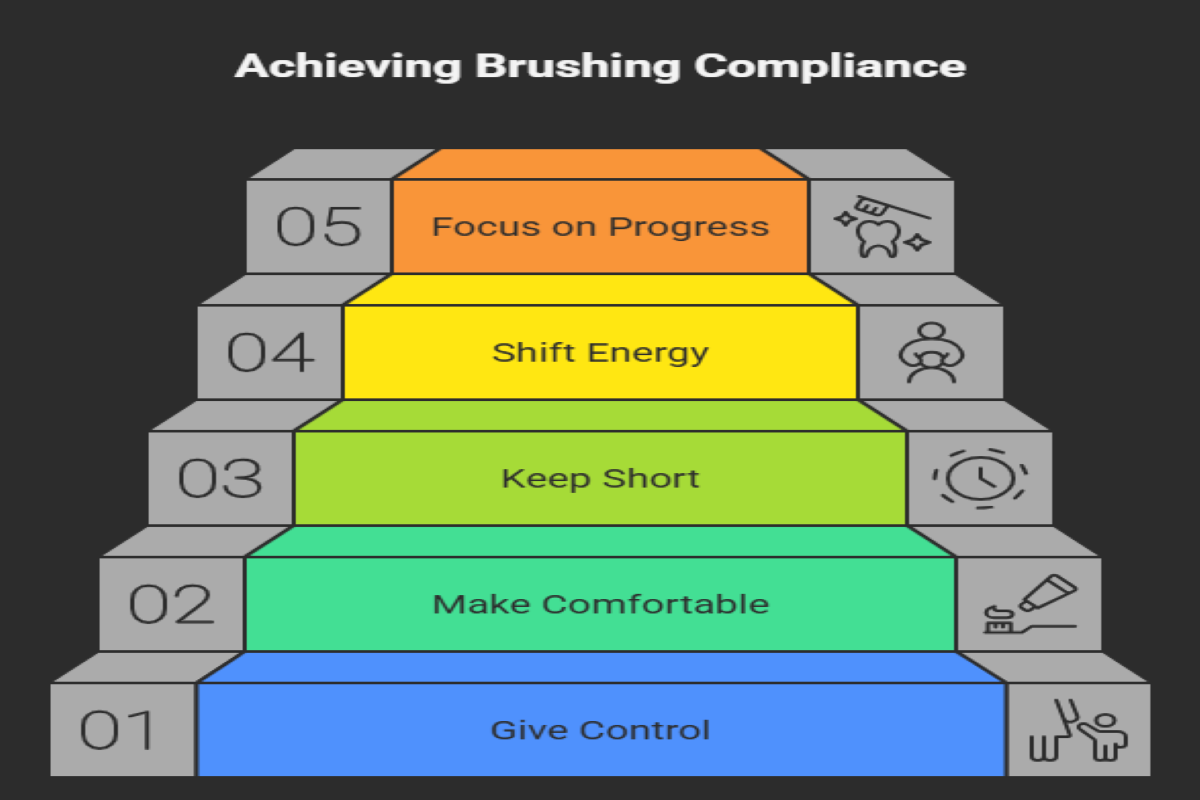
Small adjustments often make a bigger difference than strict rules.
1. Give Them a Sense of Control
Children are more likely to cooperate when they feel involved.
You can do this by offering simple choices. Let them pick their toothbrush, choose between two toothpaste options, or brush first before you step in to help. These small decisions give them a sense of ownership and reduce the need to push back.
2. Make the Experience More Comfortable
If brushing feels uncomfortable, resistance will continue.
Try adjusting what your child experiences during brushing. Use a soft-bristled toothbrush, test different toothpaste flavors, and keep your movements gentle. Even small changes can make brushing feel more manageable.
3. Keep It Short and Predictable
Brushing doesn’t need to feel long or complicated. What matters most is consistency.
Keep it at the same time each day, avoid long negotiations, and focus on building a routine rather than getting everything perfect. Children respond well to patterns, and predictability reduces resistance over time.
4. Shift the Energy Around It
Children pick up on your tone more than your words.
If brushing feels like pressure, they resist. If it feels calm and expected, they adapt. Keeping your tone steady and avoiding frustration helps prevent the situation from escalating, even on more difficult nights.
5. Focus on Progress, Not Perfection
Not every brushing session will go smoothly, and that’s normal.
Some nights will be easy, others will take more effort. What matters is consistency over time. When you focus on progress instead of perfection, the routine becomes more manageable for both you and your child.
Why These Small Changes Work
Most parents try to solve brushing battles by pushing harder. In reality, that often increases resistance.
A better approach is to:
Reduce discomfort
Increase cooperation
Keep the experience calm and consistent
Over time, these small shifts help turn brushing from a daily struggle into a routine your child accepts more easily.
When It’s More Than a Phase (And What to Do Next)
In many cases, brushing resistance improves with small changes and consistency. But sometimes, it continues longer than expected or starts to feel more intense.
When that happens, it may be a sign that something deeper needs attention.
Signs It Might Be More Than Just a Phase
It’s worth taking a closer look if you notice patterns like:
Strong resistance every single night with no improvement
Visible discomfort or sensitivity during brushing
Fear of anything related to teeth or the mouth
Avoiding brushing completely, even with support
Increased frustration or emotional reactions during the routine
These signs don’t mean something is wrong. They simply indicate that your child may need a different approach or additional support.
Why Early Support Makes a Difference
The earlier these challenges are addressed, the easier they are to manage.
With the right guidance, you can:
Adjust routines in a way that fits your child
Reduce stress around daily care
Build more positive associations with brushing and dental visits
Many parents try to navigate this alone, often second-guessing their approach or relying on mixed advice. Having clear, trusted guidance can remove that uncertainty and make everyday routines feel more manageable.
A Simple Next Step That Can Help
If brushing continues to feel like a daily struggle, it may help to get a professional perspective.
At Hurst Pediatric Dentistry, the focus goes beyond treating teeth. The team works closely with parents to understand what’s happening at home and provide simple, practical guidance that fits each child’s needs. The goal is to make dental care feel easier, calmer, and more predictable for both you and your child .
Even a single visit can help you:
Understand what your child is responding to
Get clear, personalized advice
Feel more confident about your routine at home
You Don’t Have to Figure This Out Alone
Brushing battles are common.
But staying stuck in them doesn’t have to be.
With the right support, small changes start to make a big difference. What once felt frustrating can turn into a routine that feels calmer, more predictable, and easier to manage.

More importantly, your child begins to build a healthier, more positive relationship with dental care over time.
If you’ve been second-guessing what to do, that’s completely normal. Many parents go through the same phase, especially early on.
The difference is having someone who can guide you with clear, simple steps instead of leaving you to figure it out on your own.
At Hurst Pediatric Dentistry, that guidance is part of every visit. The focus isn’t just on treatment. It’s on helping you understand what’s happening, what to adjust, and how to make daily routines feel more manageable at home.
If you have questions about your child’s brushing habits or want a clearer plan moving forward, you can call the team at (205) 969-7454 to speak with someone who understands what you’re dealing with.
